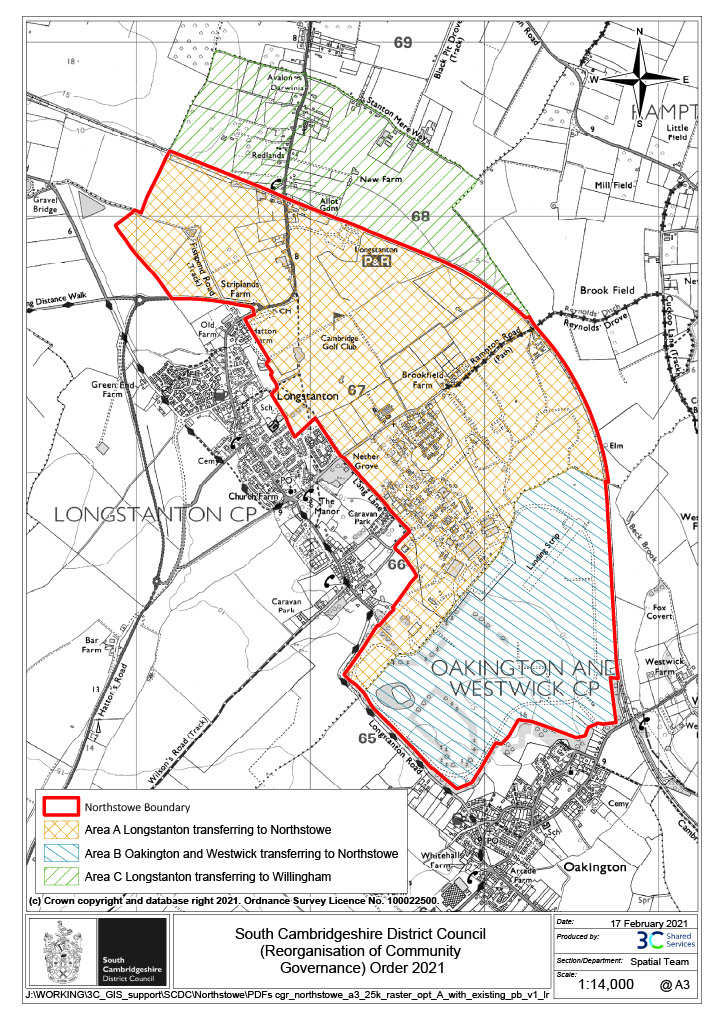
Long Stanton was mentioned in the Domesday Book. Reputedly the Anglo-Saxons used the name “Stan” meaning stone – on sites where the Romans have been. Excavations in Longstanton over recent years have shown that this area was indeed an important area in Romano-Britain.
I am putting in some photographs of Longstanton – just for interest. All old photographs of Longstanton serve to highlight the agricultural heritage of this village. Indeed, until World War 2 broke out most villagers would have probably been employed on the local farms. Poverty levels were undoubtedly high in such a agriculturally dependent community and the villagers did not have the benefit of mains water until it was literally “imposed” on the villagers c 1953 – the consequence of the construction of houses within the village for the personnel of RAF Oakington. Although, called RAF Oakington, the Officer’s Mess; H blocks and living quarters were placed in the village of Longstanton. It was this decision that has resulted in Longstanton and All Saint’s church becoming the spiritual home of many people who were based at RAF Oakington and later Oakington Barracks. As a consequence Longstanton; the airfield; the barracks and now the Immigration Centre are inextricably linked. Inevitably, if the new town of Northstowe is built the two communities will share a history (as indeed will Oakington & Westwick). Longstanton’s history will always be Northstowe’s and visa versa. Only on the creation of the new boundaries will the histories of these communities take on independent paths. Until that moment we are inescapably sharing the same story. This event will be hugely important for both the villages of Longstanton and Oakington & Westwick. Parish boundaries have existed largely in their current forms for at least a 100o years. All this history will be irrevocably changed by this one decision.


Photo 1: Melrose House, Woodside, Longstanton. Formerly part of Manor Farm this land was sold I believe to the Townsend family so that this house could be built. The Townsend family owned Melrose house and the Blacksmith’s shop and cottage that stood on the corner opposite All Saint’s church. Even today you can see a dip in the grass near the old bus stop where the old Blacksmith’s shop stood. When the junction was straightened after the war the Blacksmith’s shop was demolished and “moved” across the road. No. 1 Woodside is now known as the “Old Smithy” but in fact it was not the original one. The area occupied by No 1 Woodside today was in fact the old village Pound.
Photo 2: The High Street just beyond Home Farm (Nelson’s Crescent today). These local authority houses were the fisrt to be built in Longstanton. They replaced old cottages like the one that can be seen in the distance. Today we probably view the demolition of such old and characterful properties as a loss to the village. At the time I expect these cottages were small, dark, damp and lacking in the “modern conveniences” of the day. I expect the villagers who lived in them welcomed the “modern” life style on offer.
Photo 3: A view taken of St. Michael’s end of Longstanton. Taken from near the church we can see in the distance The Hoops pub on the left and beyond that what was the Abbs family house. This cottage was split into two by the family and remains as 2 dwellings to this day. The Hoops was run by Den Harradine’s sister Hazel and her husband for many years. It was demolished I think in the 1980’s and houses now occupy the site.